
Sarcopenia: an under-recognized disease despite its major clinical implications
Sarcopenia, characterized by age-related loss of muscle mass and reduced muscle strength and function, is associated with increased risk of falls, disability and mortality.
However, this condition remains poorly recognized in clinical practice, and no pharmacological treatment is currently available. Despite the existence of an ICD10-CM code, sarcopenia lacks a comprehensive and universally accepted definition, limiting its systematic use in medical practice.
A key challenge for better management of this pathology remains the establishment of a standardized, operational definition.
Development of a global definition
Until now, there has been no universal definition of sarcopenia. The Global Sarcopenia Leadership Initiative (GLIS) was created to solve this problem. 107 professionals from 29 countries took part in a Delphi study to establish a consensus, with publication of their initial findings in 2024 [1].
Key points of the definition
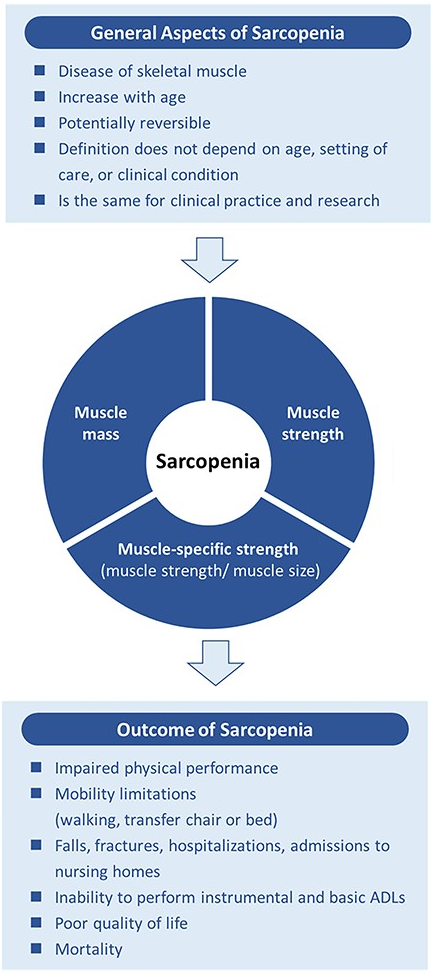
- Essential components: Sarcopenia is characterized by a combination of reduced muscle mass, reduced muscle strength and, potentially, reduced specific muscle strength (strength standardized by muscle size).
- Health consequences: This disease is associated with impaired physical performance, mobility limitations, increased risk of falls, fractures, hospitalizations, nursing home admissions, and reduced quality of life.
- Reversible disease: Sarcopenia is considered a treatable condition, paving the way for nutritional, physical and pharmacological interventions.
Challenges and next steps:
The transition to a practical definition of sarcopenia is underway. This involves determining how to effectively measure muscle mass and strength, as well as specific muscle force, while taking into account measurement validity, clinical feasibility and normative data across populations.
Multidisciplinary working groups will collaborate to define harmonized criteria, comparable to advances made in the fields of osteopenia and osteoporosis.
A global pratical definition will enable :
- Harmonization of research on an international scale.
- Identification of sufferers for better screening.
- Development and evaluation of targeted therapeutic interventions.
Conclusion:
This new conceptual definition marks a major advance in the understanding and management of sarcopenia. By bringing together experts from diverse backgrounds, GLIS is paving the way for essential clinical and scientific innovations to meet this major challenge of aging.